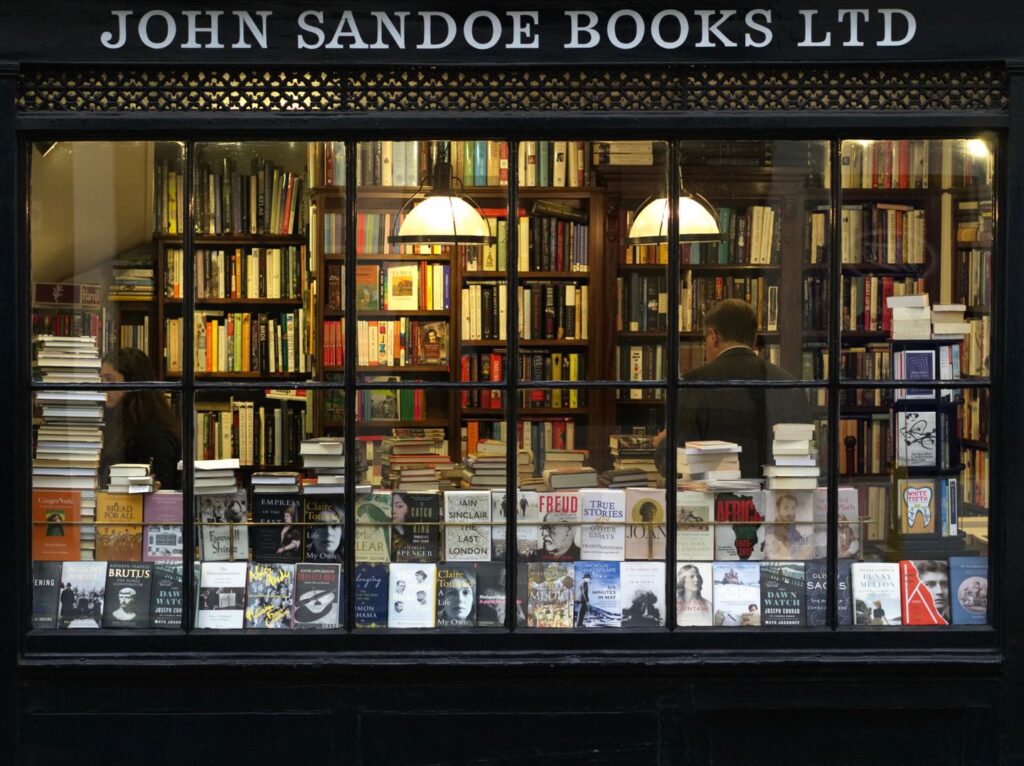
Waterstones Piccadilly occupies a building that connects two chapters of London’s retail history. Before its shelves held books, the premises housed Simpson’s, the clothing department store designed by architect Joseph Emberton. The address on Piccadilly makes it an interesting destination for readers interested in architecture as well as literature.
From department store to bookshop
The Twentieth Century Society records the building’s 1930s origins and the role of engineer Felix Samuely in its design. Its structural approach made it possible to accommodate generous commercial floors. The transition to a bookshop illustrates how a retail building can retain much of its architectural character while being used for a different purpose.
Waterstones took over the premises at the end of the twentieth century. The shop’s several floors provide space for browsing across genres, discovering titles, and attending literary events. For a visitor accustomed to small bookshops, the scale of the building is part of the experience rather than simply a matter of the number of books in stock.
Reading the building as well as the books
Historic England’s listing offers a useful account of the former Simpson premises, including its architectural materials and surviving features. The Twentieth Century Society also draws attention to the history of its lettering and design. Those details invite a visitor to look at the exterior before stepping inside.
A bookshop of this kind is a place to spend time rather than simply purchase a predetermined title. Cinema books, biographies, screenplays and art publications can be approached alongside fiction and history. The physical organization of shelves encourages the chance discoveries that are easy to miss when searching for an exact product online.
A London cultural stop
Piccadilly is associated with theater, shopping and other forms of urban leisure. A visit to a large bookshop can complement an interest in the city’s film and cultural institutions. Check the bookseller’s current information before traveling for a particular event; an architectural history is not a substitute for up-to-date opening hours or event listings.