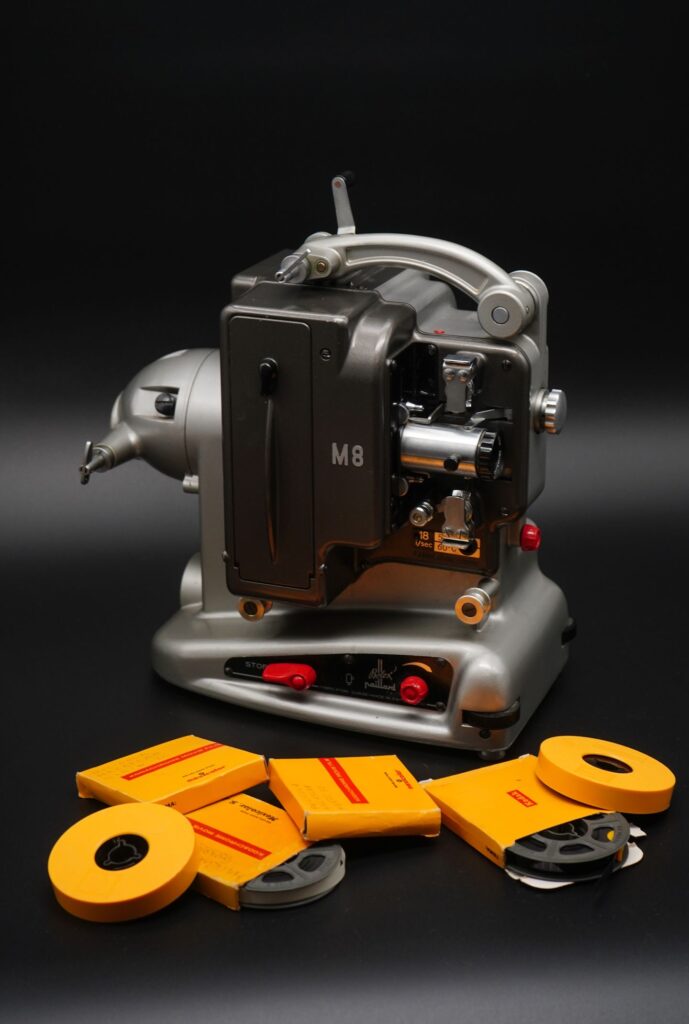
Watching a film at home can make cinema seem like a collection of files that are always available on demand. The history of the moving image is less straightforward. Many productions survive through individual prints, incomplete elements, personal collections or documentation that remains after the images themselves become difficult to find. To understand a film tradition, it helps to understand the materials that carry it.
A film is more than a title
A title in a database is evidence that someone has recorded a production. It is not proof that a complete viewing copy survives. Nor does an online video necessarily represent the version shown at the original release. A film can circulate in shortened, dubbed, subtitled or otherwise altered forms. Comparing those versions is part of the work of film history.
Physical film materials may include a camera negative, a release print or sound elements. Each has a different relationship to the completed production. A print intended for theatrical projection can bear the marks of use. A damaged or incomplete element may still be valuable if it preserves footage unavailable elsewhere. The question is not simply whether a copy looks attractive on a modern screen, but what it can tell researchers about the film.
Preservation, restoration and access
These terms describe related but distinct activities. Preservation seeks to keep materials from deteriorating further and to maintain the information they contain. Restoration may involve careful work to reconstruct or improve a presentation using surviving sources. Access concerns how audiences and researchers can actually encounter the result. A film can be preserved without being available to stream, and an easily accessible online file is not necessarily a preserved master.
The George Eastman Museum’s South Asian Film Collection history describes the development of a collection through donations and preservation work for films from India and Pakistan. Its account is a useful reminder that the survival of film material depends on practical decisions: collecting, identifying, cleaning, rehousing and cataloguing. Those steps make further research possible even before a complete restoration is undertaken.
What a catalogue can do
When browsing an archive, begin by examining the description of the particular item. The title, format, language, length, physical condition and provenance may help distinguish one version from another. Some catalogues also include information about a donor or the circumstances of acquisition. Such details need to be interpreted carefully, because the date an item entered a collection is not the release date of the film.
A reader researching an older film should search alternate spellings, regional titles and the names of people associated with the production. A failed search using one English title may simply reflect differences in transliteration. It is useful to record the exact search term that produced a result so the search can be repeated later.
Catalogues can also establish connections between materials. A film booklet might identify music and lyrics, while a poster can establish the way the production was marketed. A magazine review may offer evidence of critical reception. Each source answers a different question; together they provide a richer picture than any isolated record.
The surrounding culture deserves preservation
Publicity materials, scripts, correspondence and photographs document the work around a film. The Film Heritage Foundation’s archiving and preservation programme describes the conservation of moving images and related memorabilia, including equipment and printed materials. A film’s cultural history is not exhausted by the moving image itself.
A cinema photograph can show an exhibition environment, but it needs a reliable date and location before it can support a claim about a specific theater. A newspaper advertisement can provide evidence of a screening, while a later reminiscence may capture a personal experience of it. Neither should be asked to prove something it does not establish. Distinguishing the type of evidence is part of responsible editorial writing.
Digital files still need care
Digitization can reduce the need to handle fragile material and make a work accessible to viewers far from the original collection. It does not eliminate the need for preservation. Digital files require storage, documentation, integrity checks and a plan for migration as formats and equipment change. A convenient compressed viewing file should not be confused with a high-quality preservation master.
For a researcher maintaining a small collection of legal copies and documents, simple habits make a difference. Keep the original filenames and note their sources. Store working copies separately from untouched masters. Record modifications such as cropping, compression or translation. Maintain backups in separate locations and periodically verify that the files can still be read. These are practical measures, not a substitute for professional conservation of fragile film stock.
How to write about a film you cannot see
There is nothing wrong with writing about a film from documented sources, as long as the article makes its method clear. A synopsis based on a contemporary review is different from a first-hand critical assessment. Do not describe camera movements, performances or visual details as personally observed if you have not viewed them. Where a record is incomplete, identify what remains unknown.
The Indiana University Libraries guide to South Asian cinema archival materials offers routes into different types of collections. Exploring several sources can help a reader distinguish a missing online record from a genuinely missing physical work. It also reveals how film history extends across institutions, languages and forms of documentation.
Preserving cinema ultimately means keeping the possibility of discovery open. A future viewer may find interest in a supporting performance, a regional release, or an overlooked technician whose contribution was once taken for granted. Good cataloguing and careful attribution make those discoveries easier. They also allow an editorial publication to connect readers with evidence rather than merely repeat familiar stories about a vanished era.